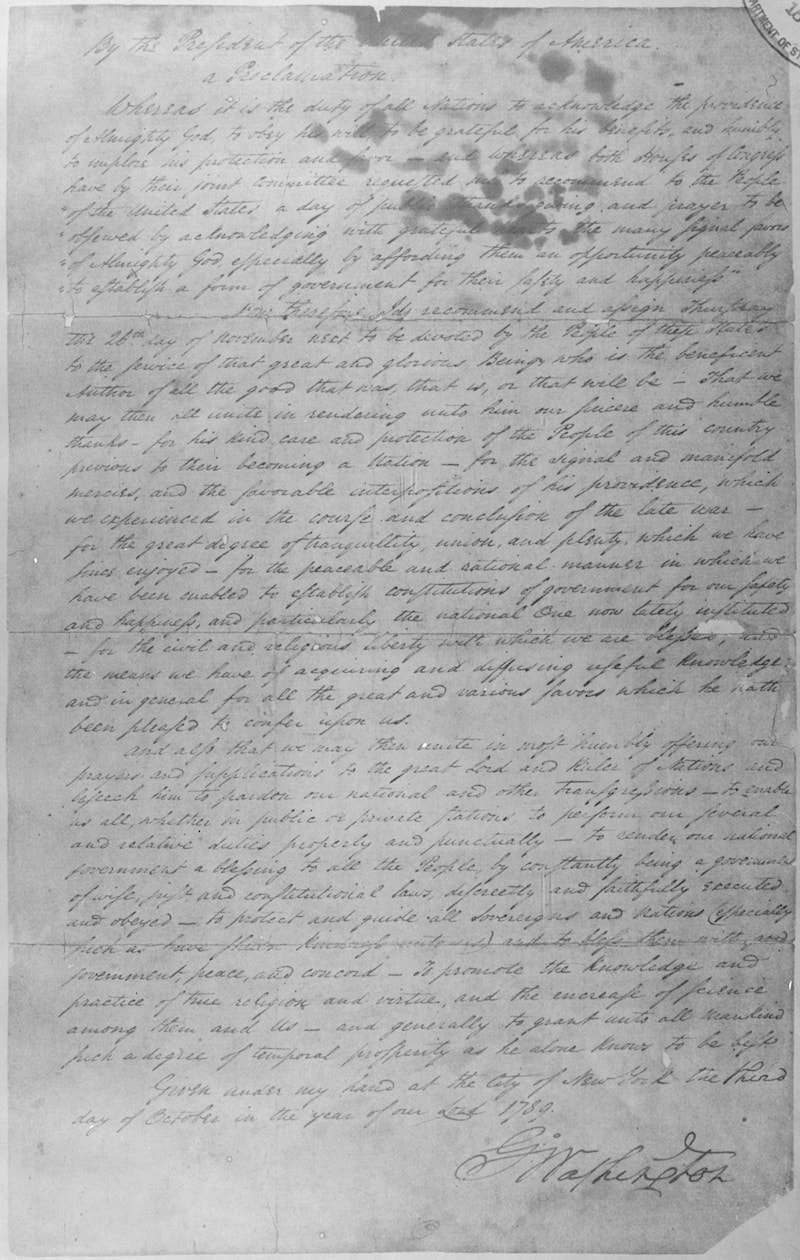
On October 3, 1789, in New York City, then the capital of the United States, President George Washington signed a short proclamation. He asked Americans to set aside Thursday, November 26, as a day of public thanksgiving and prayer. It was the first national Thanksgiving called under the new Constitution.
Congress had asked for it. On September 25, Representative Elias Boudinot of New Jersey proposed that the House and Senate request a day of thanks, especially for the chance to peacefully establish a Constitution. The House agreed, the Senate joined the next day, and a committee carried the request to Washington.
His proclamation gave thanks for the country's protection before it became a nation, for help in the war, for the peace and plenty that followed, and for the peaceful way the states had formed their governments, "particularly the national one now lately instituted." He also asked people to pray that the new government would serve them well, with wise laws faithfully obeyed.
That same day, Washington sent copies to the state governors and asked each to publish it. Newspapers printed it, and churches marked the day that November.
It was a one-time observance, not yet the yearly holiday. Later presidents chose their own dates, and Abraham Lincoln's 1863 proclamation set the custom of a Thanksgiving in late November every year. But the first national call under the Constitution came from Washington in New York on October 3, 1789.
Our 2026 White House Heritage Collection Ornament for the 250th Anniversary marks America's 250th. It is brass with a 24k gold finish, made in America, and comes with a history card.