83 Delegates. One Vote. Not a Single Dissent.
On April 12, 1776, eighty-three delegates packed into a meeting hall in Halifax, North Carolina and did something no colonial governing body had ever done. They voted unanimously to authorize their representatives in Philadelphia to push for full independence from Great Britain. Every single delegate said yes. Not one held back.
This was nearly three months before July 4, 1776. The Declaration of Independence had not been written yet. Most colonies were still debating whether independence was even the right move. North Carolina did not wait.
The document they passed that day is known as the Halifax Resolves, and it changed everything.
What the Resolves Actually Were
It helps to understand what the Halifax Resolves were and what they were not. They were not a declaration of independence. North Carolina did not declare itself free from Britain on April 12. What the delegates did was more strategic than that.
The sticking point in Philadelphia was that delegates to the Second Continental Congress had no authority from their home governments to vote for independence. They were representatives, not free agents. Without explicit permission from their colonies, they could not cast that vote even if they personally wanted to.
The Halifax Resolves solved that problem for North Carolina. The document officially empowered the colony's three delegates — William Hooper, Joseph Hewes and John Penn — to join with delegates from other colonies in voting for independence. It also encouraged every other colony to do the same.
It was the key that unlocked the door.
What Made It Possible
North Carolina did not arrive at this moment by accident. Two months earlier, in February 1776, Patriot forces defeated a large force of Loyalists at the Battle of Moore's Creek Bridge. It was a decisive win. The threat of a British-backed Loyalist uprising in the colony had been crushed, and the mood in North Carolina shifted sharply toward independence.
When the Fourth Provincial Congress assembled in Halifax on April 4, 1776, the sentiment in the room was clear. Samuel Johnston, president of the Congress, wrote to a colleague shortly after arriving: "all our people are up for independence." A committee of seven was formed to draft the formal resolution. Eight days later, the vote was taken.
The result was unanimous.
How It Moved Philadelphia
The Halifax Resolves landed in Philadelphia like a signal flare. North Carolina's delegates now had their marching orders. Virginia followed with its own authorization shortly after. Other colonies took notice. The political logjam in the Continental Congress began to break.
On July 2, 1776, the Congress voted for independence. On July 4, the final wording of the Declaration was approved. All three of North Carolina's delegates who received their authorization at Halifax — Hooper, Hewes and Penn — signed the Declaration of Independence.
The road from April 12 to July 4 was not straight, but Halifax pointed the way.
It's On the State Flag
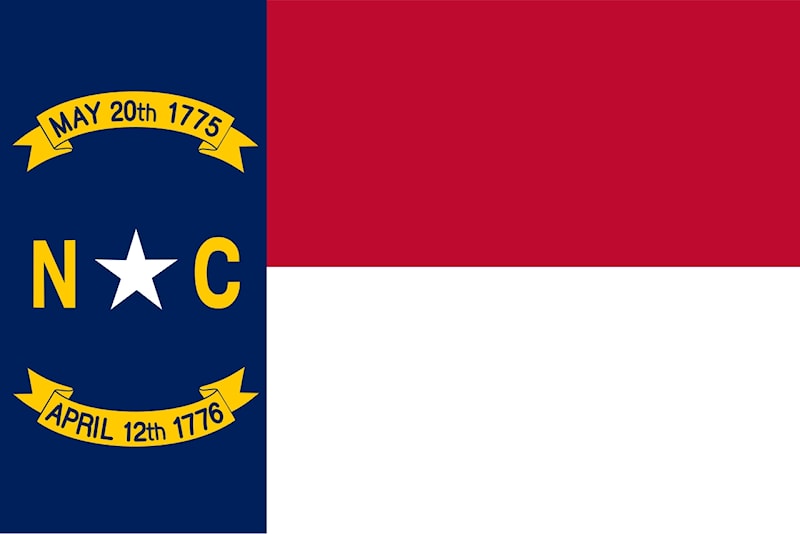
North Carolina has not forgotten what happened in Halifax. Look at the state flag and you will see two dates printed on it. One is May 20, 1775, the date of the Mecklenburg Declaration. The other is April 12, 1776.
No other state flag in the country carries the date of an independence resolution on it. North Carolina wears this one as a badge of honor. If you want to carry that pride into the holidays, our North Carolina 50 State Heritage Collection Ornament is a beautiful way to do it.
2026: The Document Comes Home
Here is something worth knowing if you are planning to travel in North Carolina this year. The only known original copy of the Halifax Resolves has been held at the National Archives in Washington for years. In 2026, for the first time, it returned to North Carolina. The document is on display at the Halifax Historic Site through October.
This is a once in a lifetime opportunity. A 250 year old piece of parchment that helped start a revolution, back in the town where it was written.
Visit Halifax This Year
The Halifax Historic Site is a 40-acre district on the banks of the Roanoke River in northeastern North Carolina. Nine 18th and 19th century buildings are open for guided tours, including taverns, a plantation home, law offices and a jail. Interpreters in period dress walk you through what life looked like in the colony that went first.
Every April 12, the site holds Halifax Day, with reenactors, craft demonstrations and guided tours marking the anniversary. This year's celebration was especially significant, drawing crowds for the 250th anniversary of the Resolves.
Most visitors to North Carolina head for the coast or the mountains. Very few make it to Halifax. That is a shame, because what happened here on April 12, 1776 mattered as much as anything that happened anywhere else in the run-up to American independence.
July 4 gets all the attention. But April 12 is when someone finally said yes first.