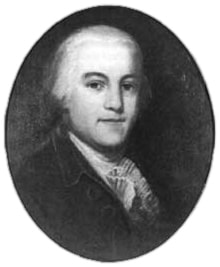
The Youngest Signer Changed His Mind.
On July 1, 1776, when the Continental Congress took its preliminary vote on the Lee Resolution for independence, Edward Rutledge of South Carolina voted no.
He was 26 years old, the youngest delegate in the entire Congress. He had led the South Carolina delegation through months of debate. He had argued that the southern colonies were not ready for independence, and that a united continental vote required more patience from the northern colonies. On that preliminary vote, South Carolina, Pennsylvania, and Delaware all voted no or were divided. New York abstained.
That night, Rutledge did something hard. He went back to his lodgings, talked to his fellow South Carolinians, and changed his mind. The next day, July 2, when the final vote was called, Rutledge rose and announced that South Carolina would vote for independence "for the sake of unanimity."
His switch brought his colony over. Combined with similar changes in Pennsylvania and Delaware's tiebreaking ride, it gave the Continental Congress what it needed: a unanimous vote of every colony present.
The Charleston Aristocracy
South Carolina in 1776 was the richest of the thirteen colonies, measured per capita. Its wealth came from rice and indigo plantations along the coast, worked by tens of thousands of enslaved Africans. Charleston was the largest city in the American South and one of the most important ports in British America. South Carolina's governing class (the Rutledges, the Middletons, the Pinckneys, the Laurenses) were as sophisticated and as well-connected as any elite in the colonies.
They were also, at first, reluctant revolutionaries. South Carolina's wealth depended on trade with Britain. Its planter class had been educated at English universities and built its great houses in the Georgian style. Everything about the culture was oriented across the Atlantic.
Edward Rutledge himself was a perfect example. Born in Charleston, educated at the Middle Temple in London, returned to South Carolina to practice law. His older brother John Rutledge was even more prominent, the president of South Carolina during the Revolution. The Rutledges had everything to lose by breaking with Britain, and they spent the spring of 1776 trying to find a way to avoid it.
The Battle of Sullivan's Island
What changed Rutledge's mind was, in part, what happened at Charleston harbor four days before the July 2 vote.
On June 28, 1776, a British fleet of nine warships commanded by Admiral Peter Parker attacked the half-finished palmetto log fort on Sullivan's Island, just outside Charleston. The fort was commanded by Colonel William Moultrie with about 400 militia and a handful of cannon. The British expected to reduce the fort in a few hours and capture Charleston.
Instead, the palmetto logs absorbed the British cannonballs without splintering. The American cannon fire was slow but accurate, and it ripped the British ships apart. After nine hours of bombardment, the British fleet withdrew. Charleston was saved. Three British ships ran aground. Over 200 British sailors and marines were killed or wounded. American casualties were 12 killed and 25 wounded.
The palmetto logs became the symbol on the South Carolina state flag, a single palmetto tree against a blue background. The silver crescent came from Moultrie's militia uniforms.
By the time Rutledge was voting in Philadelphia on July 1, news of the Sullivan's Island victory had reached Congress. South Carolina had not just talked about resisting Britain. It had actually fought off a British fleet. Independence was not a hypothetical anymore. It was already happening in Charleston harbor.
The Palmetto State
Edward Rutledge went on to sign the Declaration of Independence on August 2, 1776. He served in the Continental Army, was captured by the British at the fall of Charleston in 1780, and spent nearly a year in a British prison. After the war, he served in the South Carolina legislature and eventually became governor in 1798.
He died in January 1800 at the age of 50, having signed the Declaration at 26 and presided over his state for the next quarter-century.
South Carolina's path to independence was not a straight line. It took a British fleet shelling Charleston and a 26-year-old walking back his own vote to get the colony to yes.
We commemorate South Carolina on our 50 State Heritage Collection ornament.