Massachusetts Didn't Decide Alone. It Asked Its Towns.
On May 10, 1776, the Massachusetts House of Representatives did something remarkable. Instead of voting on independence itself, it sent the question back to every town in the colony.
The resolution asked each town meeting to instruct its representatives on whether, if the Continental Congress declared the colonies independent from Great Britain, the town would "solemnly engage with their Lives and Fortunes to Support the Congress in the Measure."
This was democracy in its rawest form. Before Massachusetts would help push the colonies toward independence, it wanted to hear from the people in every town from Boston to the Berkshires.
Why the Town Meeting Mattered
By the spring of 1776, Massachusetts had been at war for over a year. Lexington and Concord had happened in April 1775. Bunker Hill followed in June. George Washington had taken command of the Continental Army in Cambridge. The British had evacuated Boston in March 1776.
The people of Massachusetts were already fighting. But they had not yet declared why.
The town meeting was a New England institution dating back to the 1630s. Every free adult male in a town could speak, vote, and shape local policy. When the House sent the question of independence to the towns, it was trusting that tradition. The idea was that the people themselves, not just their representatives, should decide something this important.
The Votes Came In
Over the next six weeks, town after town voted. The responses were overwhelming.
Boston voted unanimously for independence on May 23. Malden went on record the same day with a resolution that read like a preview of the Declaration itself, accusing the king of "destroying millions of lives and endangering millions more." Braintree, where John Adams lived, voted for independence with a resolution calling British rule "destructive of all peace, liberty, and safety." Topsfield, Natick, Acton, Scituate, Plymouth. Town after town reported back with the same answer.
By late June, when the votes were tallied, the message to the Continental Congress was clear. Massachusetts had already made up its mind. Its delegates in Philadelphia, including John Adams, Samuel Adams, John Hancock, Elbridge Gerry, and Robert Treat Paine, could vote for independence knowing the people back home were with them.
"We are in the very midst of a Revolution"
John Adams, watching all this from Philadelphia, wrote to his wife Abigail on July 3, 1776, with astonishment. "The second Day of July 1776," he predicted, "will be the most memorable Epocha, in the History of America." He was a day off. It was July 4 that became the date everyone remembered. But his larger point stuck: something enormous was happening, and he could feel it.
What made it possible was the groundwork laid in May, when Massachusetts had gone to its people and asked the question. By the time the Continental Congress voted for independence in July, Massachusetts was not acting on behalf of a political class in Boston. It was acting on behalf of thousands of town meetings that had already said yes.
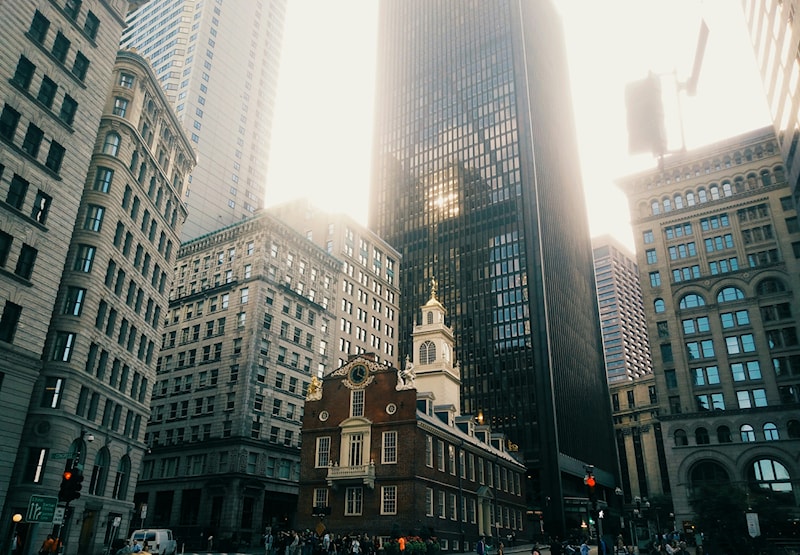
The Old State House Remembers
On July 18, 1776, two weeks after independence was declared in Philadelphia, Colonel Thomas Crafts stepped onto the balcony of the Old State House in Boston and read the Declaration of Independence aloud to a crowd in the street below. When he finished, the lion and unicorn, the royal symbols mounted on the roof, were torn down and burned in a bonfire on King Street.
That moment gets the image. But the real work had already been done two months earlier, in places like Malden and Braintree and Topsfield, where ordinary people had voted in their town meetings and said: yes, we will pledge our lives and fortunes. Go ahead.
Massachusetts did not decide for the colonies on May 10, 1776. It asked the colonies' smallest unit of government, the town meeting, what it wanted. And the towns answered.
We commemorate Massachusetts on our 50 State Heritage Collection ornament.